Resources
Confused between UI, UX, and Product Design? This guide breaks down real differences in responsibilities, skills, and career paths to help you choose.
Author

Tarik Eamin
Publish Date :
Read Time :
18 Minutes


Resources
Confused between UI, UX, and Product Design? This guide breaks down real differences in responsibilities, skills, and career paths to help you choose.
Author
Tarik Eamin
Publish Date :
Read Time :
18 Minutes
Key Takeaways
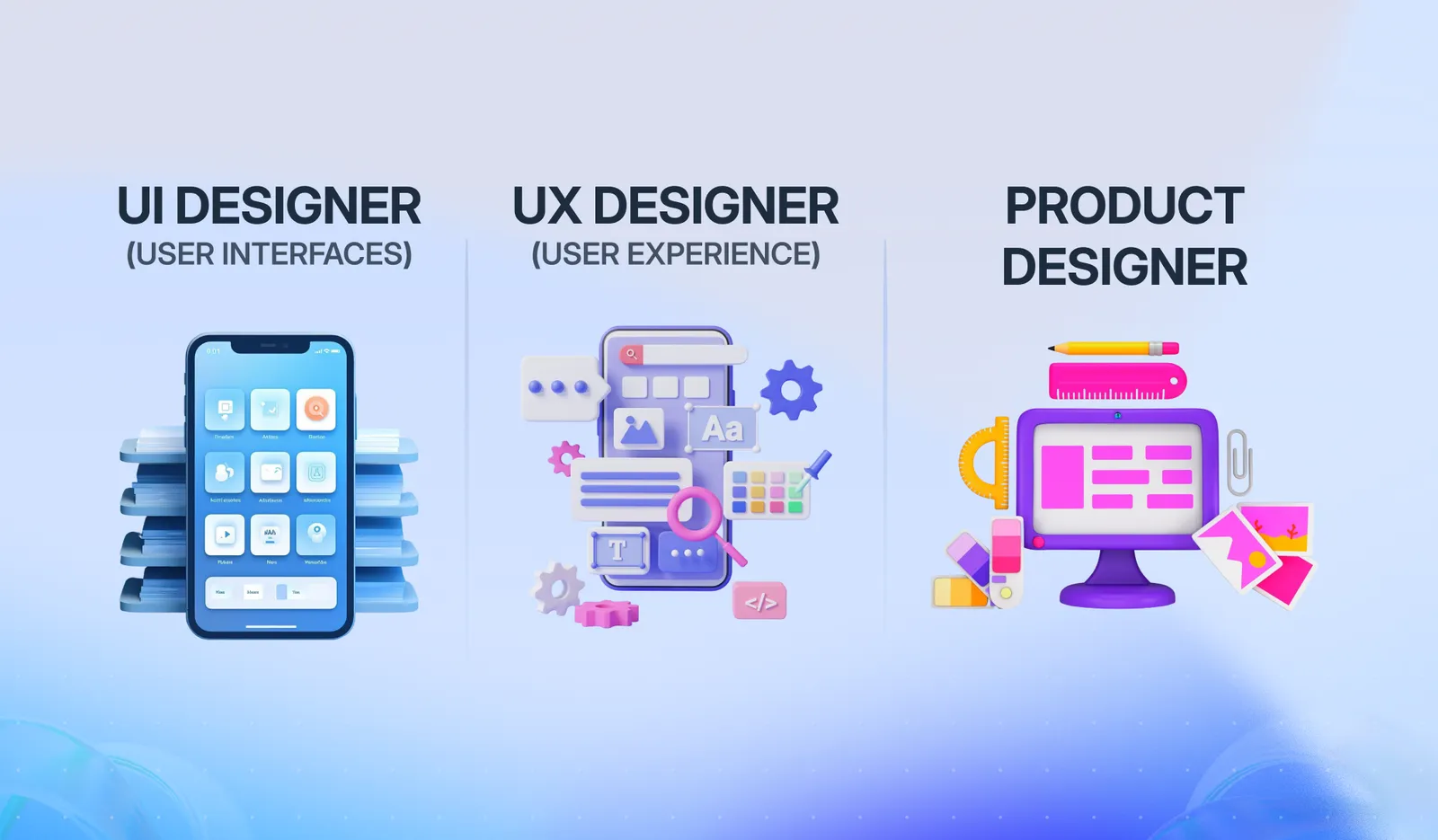
UI Designers craft the visual layer, layouts, color systems, typography, and design systems that shape first impressions.
UX Designers solve usability problems through research, wireframing, and testing real user behavior.
Product Designers own the full picture combining UI, UX, and business strategy to drive measurable outcomes.
The right path depends on how you think: visual, analytical, or strategic.
AI is accelerating execution across all three roles, but strategy and human judgment remain irreplaceable.
Choosing between a UI designer vs UX designer vs Product Designer can feel confusing, especially when the roles overlap but differ in responsibility and impact. Many people struggle to understand which path fits their strengths, what each role actually does, and how they contribute to a product’s success.
The truth is, these three roles think differently, solve different problems, and are measured by different outcomes even when they're working on the same product. Understanding that distinction is what separates a focused career path from years of misaligned effort.
By the end, you’ll have a much better understanding of each roles and how it fits into the broader design ecosystem.
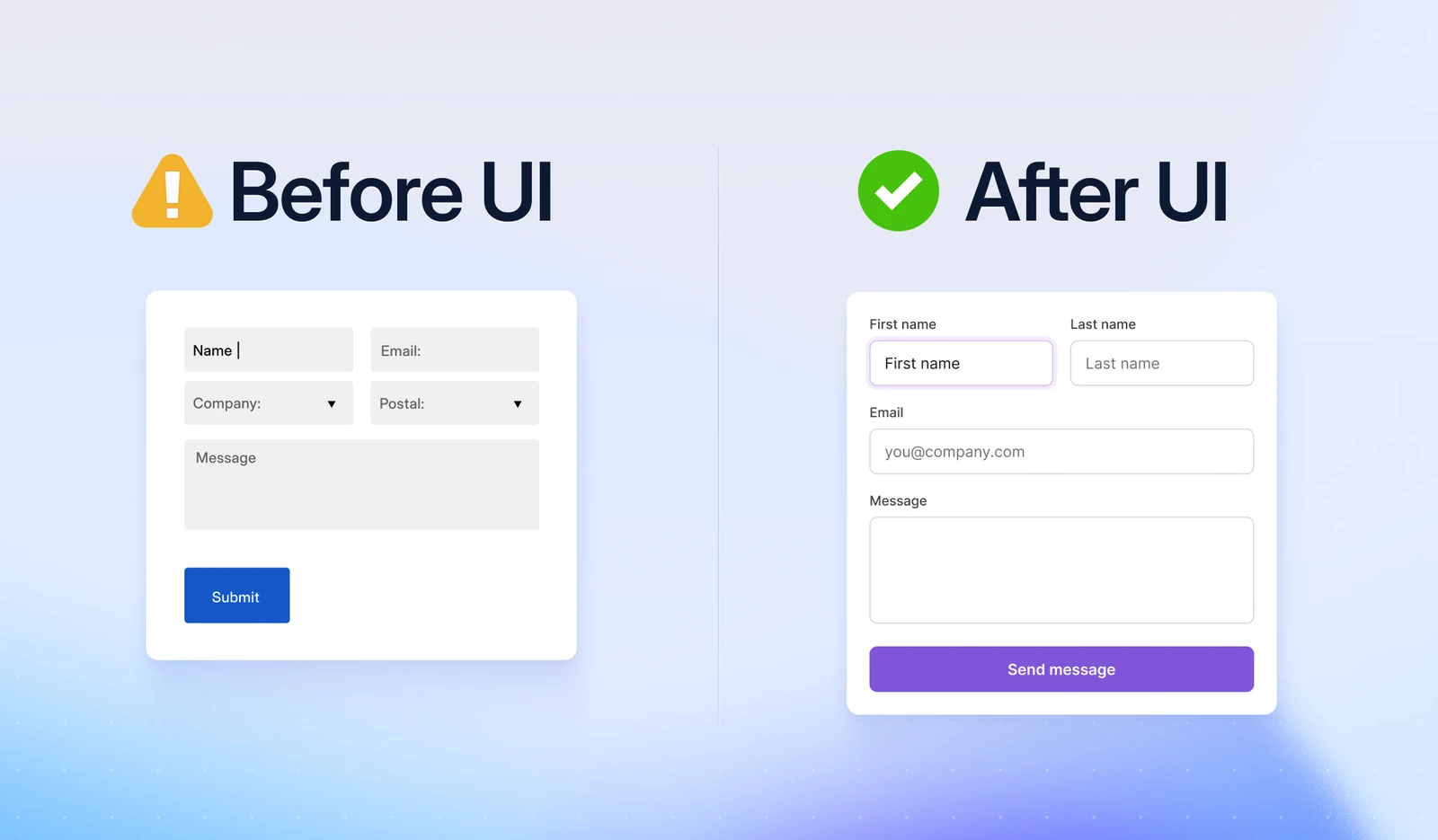
A UI designer is the person responsible for every single visual element a user interacts with on a screen. Every button you tap, every dropdown you open, every card you scroll past, someone deliberately designed that. The spacing, the color, the shadow, the size of the text., the way a toggle switch animates when you flip it, that's UI design.
But here's the part most people miss: good UI design is invisible. When it's done well, nobody notices it, you just move through the product effortlessly. When it's done poorly? Everything feels "off", even if users can't articulate exactly why.
At its core, UI design sits at the intersection of three things: visual design, interface behavior, and brand identity.
A UI designer decides how a product looks -
the layout structure,
the color palette,
how elements are sized relative to each other,
and the whitespace between components.
But this isn't just about aesthetics, every visual choice is a communication decision. A primary button is styled differently than a secondary one because the user needs to intuitively understand hierarchy. That's not decoration, that's function expressed through visuals.
A UI designer thinks about how elements respond to user input. What happens when someone hovers over a card? Does it lift with a subtle shadow? Does the button change color on press? These micro-interactions seem insignificant, but they compound into the overall feeling of a product. A snappy, well-animated interface feels polished. A sluggish, inconsistent one feels broken, even if the underlying functionality is identical.
A UI designer ensures that the product feels like it belongs to the company behind it. If you open Spotify, you immediately know it's Spotify. Not because of the logo in the corner, but because of the dark palette, the bold typography, the way album art dominates the layout. That visual DNA is baked into every screen, and the UI designer is the one maintaining it.
So what does a UI designer actually do on a team? Let's walk through the core responsibilities of a UI Designer.
When a new feature needs to ship, the UI designer figures out how information should be arranged on screen. Where does the primary action go? How much content is visible above the fold? How does the layout adapt from desktop to mobile? These aren't arbitrary choices, they're driven by user goals, content priority, and platform conventions.
This is arguably the most impactful work a UI designer does, and most people outside the field don't even know it exists. A design system is a library of reusable components, like, buttons, input fields, modals, cards, and navigation patterns. And it comes with documented rules for how and when to use them.
Think of it as the product's visual grammar. Without one, every designer on the team creates their own version of a dropdown, and suddenly the product looks like five different people designed it. Because five different people actually did. A strong design system prevents that chaos and makes the entire team faster.
Products grow, new features get added, old ones get updated, different teams work on different sections. Over time, inconsistency creeps in. The settings page uses 14px body text while the dashboard uses 16px. The icon style in the mobile app doesn't match the web app.
The UI designer is the one who catches these gaps and aligns everything. It's not glamorous work, but it's what separates a product that feels cohesive from one that feels stitched together.
A design is only as good as its implementation. UI designers spend a significant amount of time working with frontend engineers. They specify exact spacing values, provide assets in the right formats, review builds to catch visual bugs.
The handoff process is where many great designs fall apart, and experienced UI designers treat this phase with as much seriousness as the design phase itself.
UI designers play a critical role in shaping product success, often without direct recognition. Their biggest impact starts with first impressions, which are formed within seconds of opening an app. Users instantly judge credibility and quality based on the interface design, making UI a key driver of trust and engagement.
Strong visual design improves usability. Even with solid UX structure, poor visual hierarchy can confuse users. UI designers ensure that key actions stand out, error messages are visible, and layouts guide users naturally through the interface. This alignment between UI and UX enhances overall user experience and conversion rates.
Brand identity is built through UI design. Users remember how a product looks and feels, not just how it functions. Distinct design systems like clean, modern, or playful interfaces help products stand out and create emotional connections that drive loyalty.
Leading companies Apple, Google, and Stripe invest heavily in UI because it delivers a competitive advantage. When features are similar, users choose the product that feels better visually and interactively. High-quality UI design directly influences user retention, satisfaction, and business growth.
Here's a scenario most people have experienced: you download an app that looks absolutely stunning. Beautiful colors, polished animations, gorgeous typography. But within two minutes, you're frustrated, you can't find what you're looking for, the navigation makes no sense, so you rage-quit and uninstall. That app had great UI. It had terrible UX.
A UX designer is the person who makes sure that never happens. They're not focused on what the product looks like. UX designers take care of how the product works, how it feels to use, and if it solves the problem it's supposed to solve.
For example, think a UI designer is an interior decorator making a house beautiful, and the UX designer is the architect. So, the UX designer is who made sure the hallways are wide enough, the kitchen is near the dining room, and all logically. The UX Designer works with structure, logic and flow.
A UX designer's focus can be distilled into three pillars: the user journey, usability, and problem-solving.
The user journey is the complete path someone takes to accomplish a goal within your product. From landing on homepage to complete a purchase, submit a form, or finish a task, every step is something a UX designer has thought about. They map these journeys out, identify where people get confused or drop off, and redesign those touchpoints to be smoother.
Can a first-time user figure out how to use the product without a tutorial? Can someone complete the core action within a reasonable number of taps or clicks? A UX designer asks these questions obsessively. They don't assume anything works until real users prove it does.
Problem-solving is where UX design separates itself from every other design discipline. A UX designer starts with a problem, not a canvas. Before they sketch a single wireframe, they're asking: What's the user struggling with? Why does this friction exist? What's the simplest way to eliminate it?
The solution might be a redesigned screen, or it might be removing a screen entirely. Sometimes the best UX decision is taking something away, not adding something new.
Now, let's find out about the key responsibilities a UX Designer.
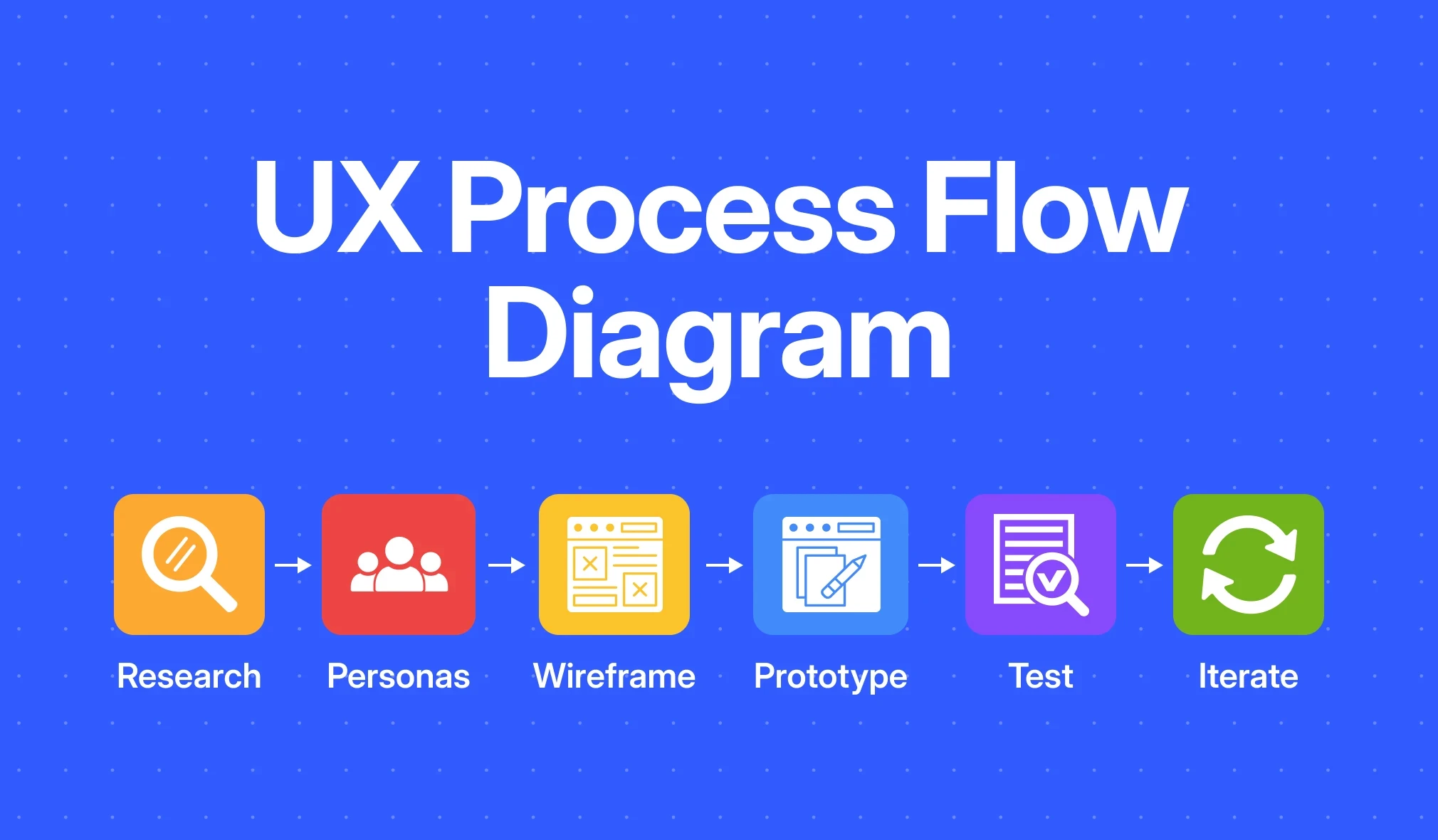
Conducting user research is where everything begins. This isn't just sending out a Google Form and calling it a day. Real UX research involves:
user interviews,
contextual inquiries (watching people use the product in their natural environment),
analyzing behavioral data from tools like Hotjar or FullStory, and synthesizing all of that into patterns.
A good UX designer can talk to 8 users and identify the three core problems that affect thousands. That pattern recognition is a skill that takes years to develop.
Creating wireframes is how UX designers think out loud. Wireframes aren't pretty, they're intentionally stripped of color, imagery, and styling. A low-fidelity wireframe might look like a bunch of gray boxes and placeholder text, and that's exactly the point. It forces everyone to evaluate the structure, hierarchy, and flow without getting distracted by visual details. When someone says "I don't like the look of this wireframe," the UX designer knows they've misunderstood the exercise.
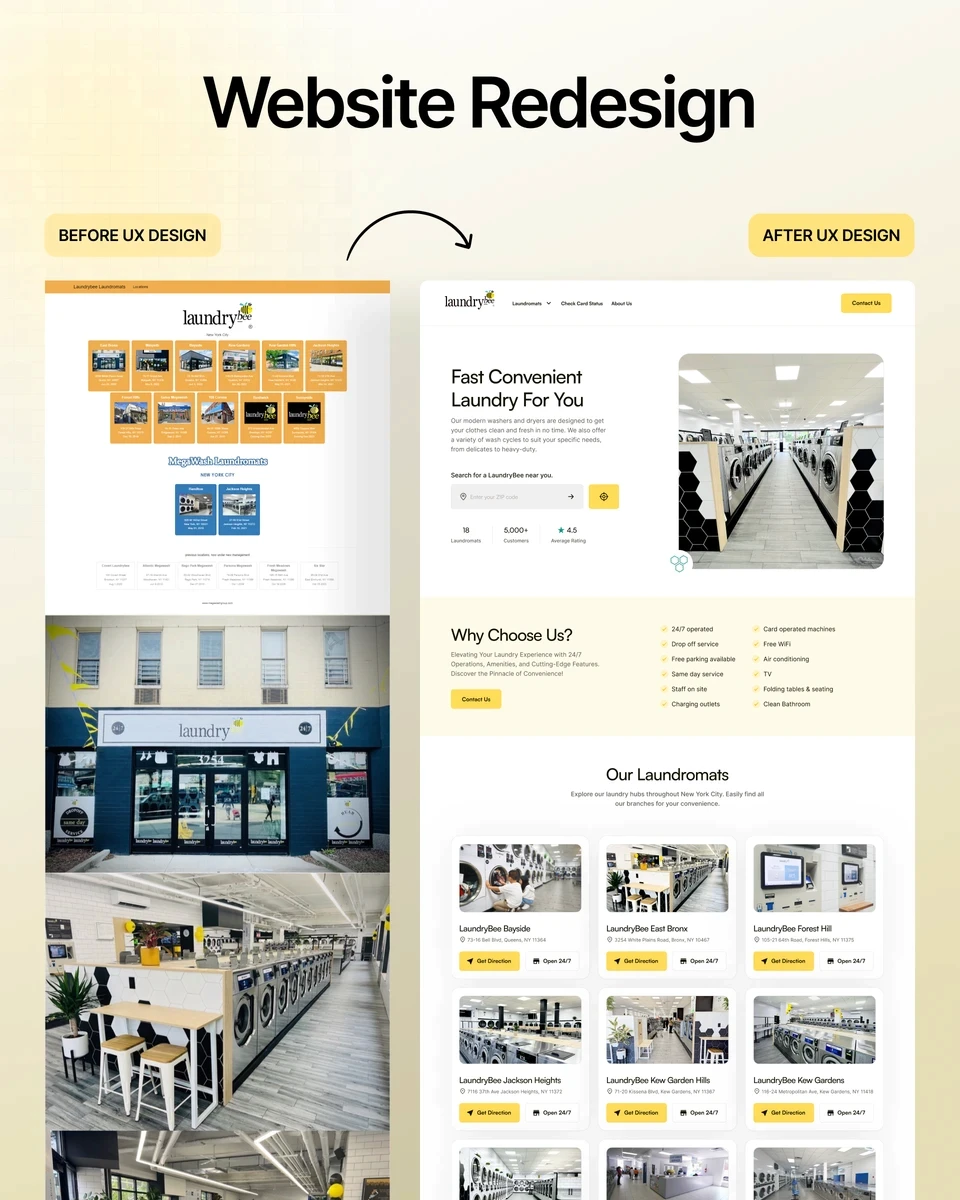
Running usability tests is where assumptions go to die. A UX designer creates a prototype, puts it in front of real users. Also gives them a task, example, ("Book a flight from Portugal to Russia for next Friday"), and then watches without helping. They note where users hesitate, where they tap the wrong thing, where they express confusion. Those insights feed directly back into the next iteration. The best UX designers treat usability testing as a recurring practice, not a one-time checkpoint.
A product designer is someone who owns the design of a product from end to end. It is not just a screen, not just a flow, but the entire experience tied to a business outcome. They don't just ask "is this usable?" or "does this look good?" They ask a fundamentally different question: "Should we even build this in the first place?"
That question is what separates product designers from UI and UX designers. It's not about skill level or seniority, it's about scope and mindset.
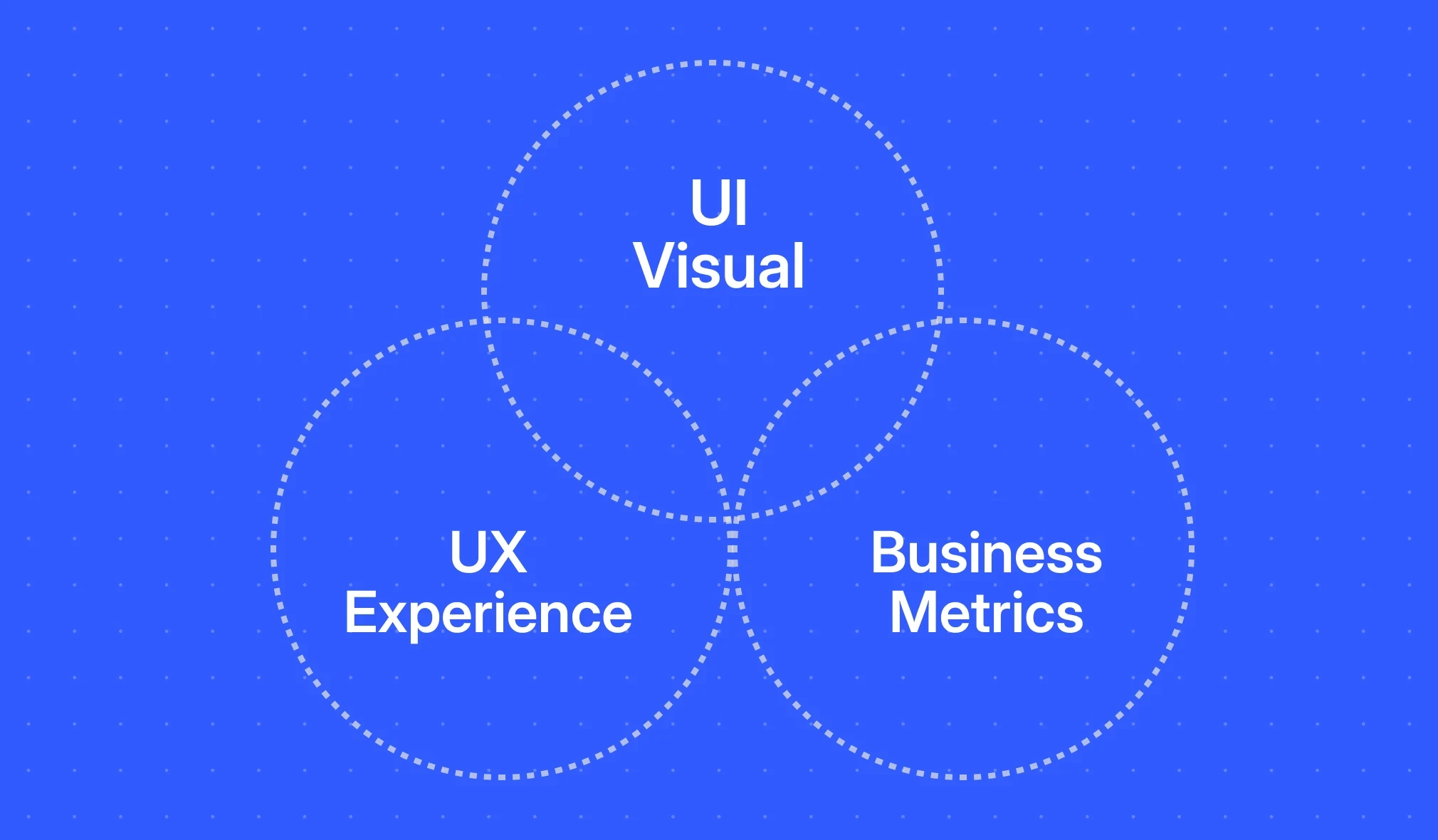
Unlike UI or UX roles, where responsibilities tend to cluster around specific skill areas, a product designer's responsibilities shift based on what the product needs. But here's what consistently shows up across the role:
A product designer doesn't hand off a wireframe and wait for feedback. They're involved from the earliest problem definition, sometimes even before a brief exists, all the way through to post-launch analysis. They own the design outcome, not just the design deliverable.
Product designers spend a surprising amount of their time in conversations, not in Figma. They align with product managers on priorities:
negotiating scope with engineers,
presenting trade-offs to stakeholders,
and sometimes pushing back on feature requests that don't serve the user or the business.
This requires communication skills that go far beyond what traditional design education teaches.
Good product designers look at quantitative data, funnel drop-offs, feature adoption rates, session heatmaps, and combine it with qualitative insights from user research. When they propose a design direction, they can articulate why with evidence, not just aesthetic preference.
This is where the product designer role becomes truly distinct. Unlike UI or UX designers, product designers are often accountable for measurable outcomes. They closely track conversion rate how effectively designs turn users into customers or drive actions.
They also monitor retention rate, ensuring users keep coming back through improved experiences. Additionally, they focus on engagement metrics like time spent, interactions, and feature usage.
These metrics guide their decisions, helping them iterate designs based on real user behavior and directly impact the product’s growth and success.
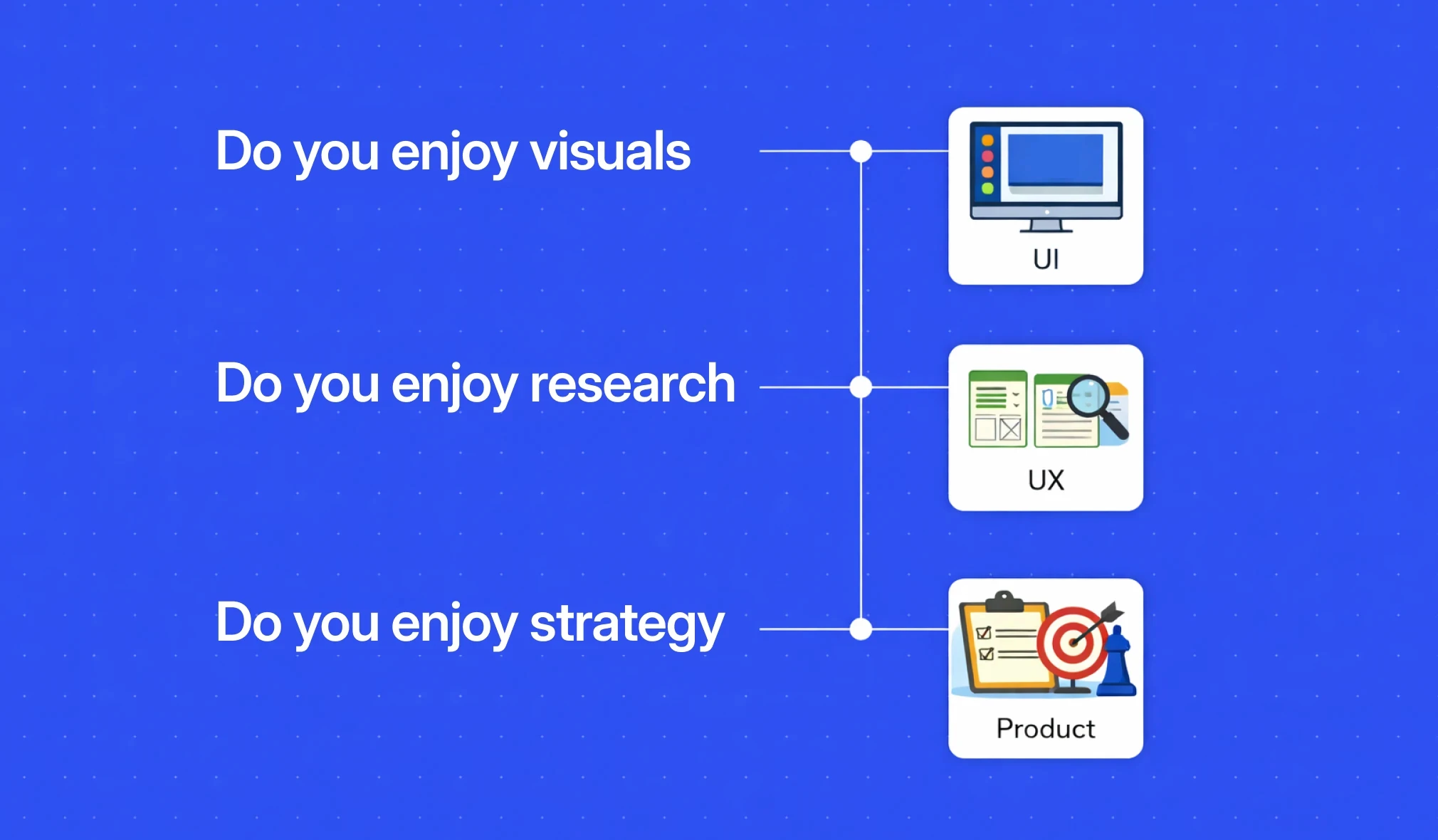
Choosing between UI, UX, and Product Design often comes down to how you naturally think and what kind of problems you enjoy solving.
If you’re visually driven, detail-oriented, and love crafting beautiful interfaces, UI Design is your space. You enjoy typography, color systems, layouts, and making things look polished and engaging. Your satisfaction comes from turning ideas into visually compelling screens.
But if you’re more analytical and curious about user behavior, UX Design fits better. You enjoy research, user flows, testing, and understanding why users behave the way they do. You’re focused on clarity, usability, and solving friction in the experience.
And if you lean strategic and big-picture, Product Design is the strongest match. You don’t just think about how things look or work, you think about what should be built and why. You’re interested in business goals, product decisions, and outcomes, balancing user needs with impact.
Understanding the difference between UI, UX, and Product Designers becomes much clearer when you look at the skills they rely on daily. While there is some overlap, each role prioritizes a distinct set of capabilities based on its core responsibility.
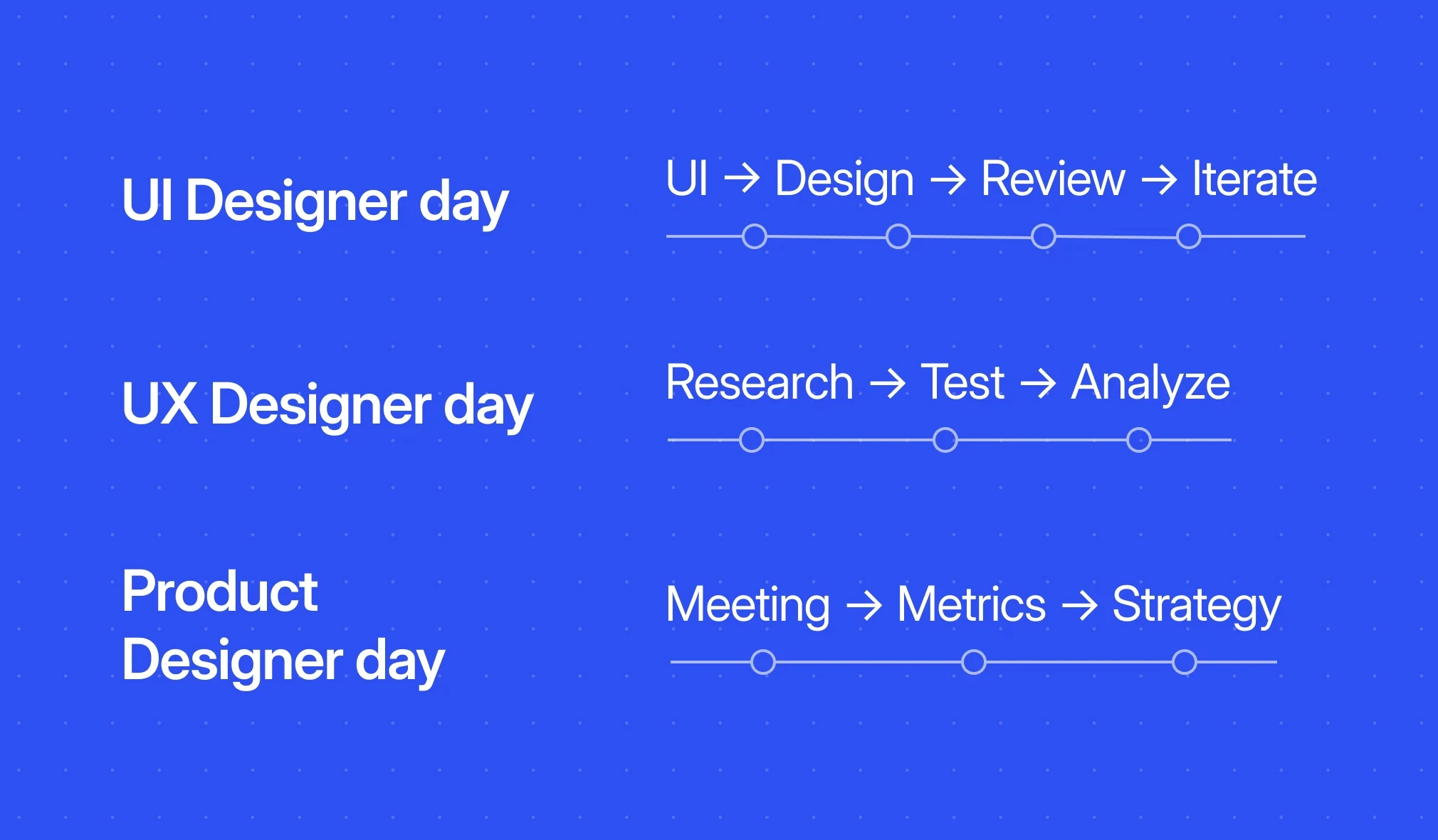
UI Designers focus on the visual layer of the product everything users see and interact with on the screen. Their skills revolve around clarity, aesthetics, and consistency.
UI designers must know how to guide user attention. Through size, spacing, contrast, and layout, they ensure users instantly understand what matters most on a screen.
Choosing the right fonts, sizes, and spacing is critical. Good typography improves readability, establishes tone, and enhances the overall user experience.
UI designers use color not just for aesthetics but for function—creating contrast, signaling actions (like errors or success), and maintaining brand consistency.
They build and maintain scalable design systems that ensure consistency across the product and speed up development.
UX Designers focus on how the product works and feels. Their goal is to create seamless, intuitive experiences by deeply understanding users.
UX designers gather insights through interviews, surveys, and behavioral analysis. This helps them understand user needs, pain points, and motivations before designing solutions.
They create low-fidelity layouts that define structure and flow without focusing on visuals. Wireframes help test ideas quickly and align teams early.
Testing designs with real users is a core skill. UX designers observe how people interact with a product, identify friction points, and refine the experience based on feedback.
They organize content and features in a logical way, ensuring users can easily navigate and find what they need without confusion.
Product Designers go beyond interface and experience, they focus on the entire product lifecycle and its success. Their skills combine design, strategy, and business thinking.
Product designers understand company goals, market positioning, and revenue drivers. They make design decisions that align with business outcomes like growth, retention, and conversion.
They rely on data to validate decisions, this includes analyzing user behavior, tracking metrics, and using insights to iterate and improve the product continuously.
Unlike UI or UX designers, product designers help define what should be built. They prioritize features, identify opportunities, and ensure the product is solving the right problems.
They work closely with developers, product managers, marketers, and stakeholders. Strong communication and alignment skills are essential to bring ideas to life and ensure everyone is working toward the same goal.
AI is not removing the need for designers, it’s reshaping where their value lies. Among three, the shift is clear: execution is becoming faster and increasingly automated, while human contribution is moving toward judgment, strategy, and meaning.
UI design is experiencing the most visible disruption. Tools like Pixso, Uizard, and Figma AI can now generate full interfaces from simple prompts, including layouts, components, and even structured design systems.
What once took hours of manual work can now be produced in minutes. This doesn’t eliminate UI designers, but it changes their role significantly. Instead of focusing on creating screens from scratch, designers are now expected to refine, guide, and elevate what AI produces.
The real value shifts toward crafting a strong visual identity, making nuanced aesthetic decisions, and ensuring the interface feels intentional rather than generic. Emotional design, brand expression, and taste, these remain difficult for AI to replicate.
As a result, UI designers are moving away from execution-heavy tasks toward a more direction-driven, creative role.
UX design is being transformed more quietly but just as deeply. AI can now process large volumes of research data, summarize interviews, detect behavioral patterns, and even simulate user interactions.
This has given rise to a new kind of workflow where an AI UX Designer mindset becomes relevant. Designers who know how to work alongside AI to generate insights faster and test ideas more efficiently. Research that once took days can now be synthesized in minutes, and usability issues can be identified through automated analysis or synthetic user testing.
However, the critical layer still belongs to humans. AI can highlight patterns, but it cannot fully understand context, emotion, or cultural nuance. Interpreting why users behave a certain way, identifying meaningful insights, and making ethical decisions about design still require human empathy and judgment.
UX designers are no longer just researchers, they are becoming interpreters of AI-generated insights, ensuring that speed does not replace depth.
Product Designers are uniquely positioned to benefit from AI because their role extends beyond execution into decision-making. AI acts as a powerful copilot, helping them generate ideas, prototype rapidly, and analyze product data without heavy reliance on separate teams. This significantly accelerates experimentation cycles, allowing product designers to test, iterate, and refine concepts at a much faster pace.
However, while AI improves efficiency, it does not replace the need for vision. Deciding what to build, aligning user needs with business goals, and navigating trade-offs across teams remain deeply human responsibilities. Product designers are increasingly valued for their ability to think strategically, lead cross-functional collaboration, and define the direction of a product rather.
Among the three, Product Design is the most resilient, not because it avoids AI’s impact, but because it operates at a higher level of abstraction. UI design is more exposed to automation due to its execution-heavy nature. While UX design sits in a transitional space where research is accelerated but interpretation remains human.
Product design, however, centers on decision-making, strategy, and long-term thinking, areas where AI serves as an assistant rather than a replacement. Ultimately, the real shift is not about roles but about mindset.
Designers who focus only on execution will struggle. But those who move toward strategy, systems thinking, and leadership will become increasingly valuable in an AI-driven landscape.
Yes, especially in startups or freelance roles, one person often handles all three. However, it requires a broad skillset, visual design, user research, and strategic thinking. As products scale, these roles usually become specialized for deeper expertise and efficiency.
Salaries vary by region, but generally Product Designers earn the most due to strategic impact, followed by UX Designers, then UI Designers. Product roles command higher pay because they influence business outcomes, not just design execution.
A Product Designer focuses on user experience and solutions, while a Product Manager focuses on business goals, roadmap, and priorities. Designers shape how the product works; managers decide what to build and why, balancing stakeholders, market needs, and strategy.
Upgrade to Grabui
Discover unlimited inspiration to help you Design fast. Build faster.


Share On


